Case Study: TJ Morris Industrial Refrigeration Controls
Two large industrial CO₂ refrigeration packs engineered to support efficient, resilient refrigeration across a major food retail distribution centre.
Overview
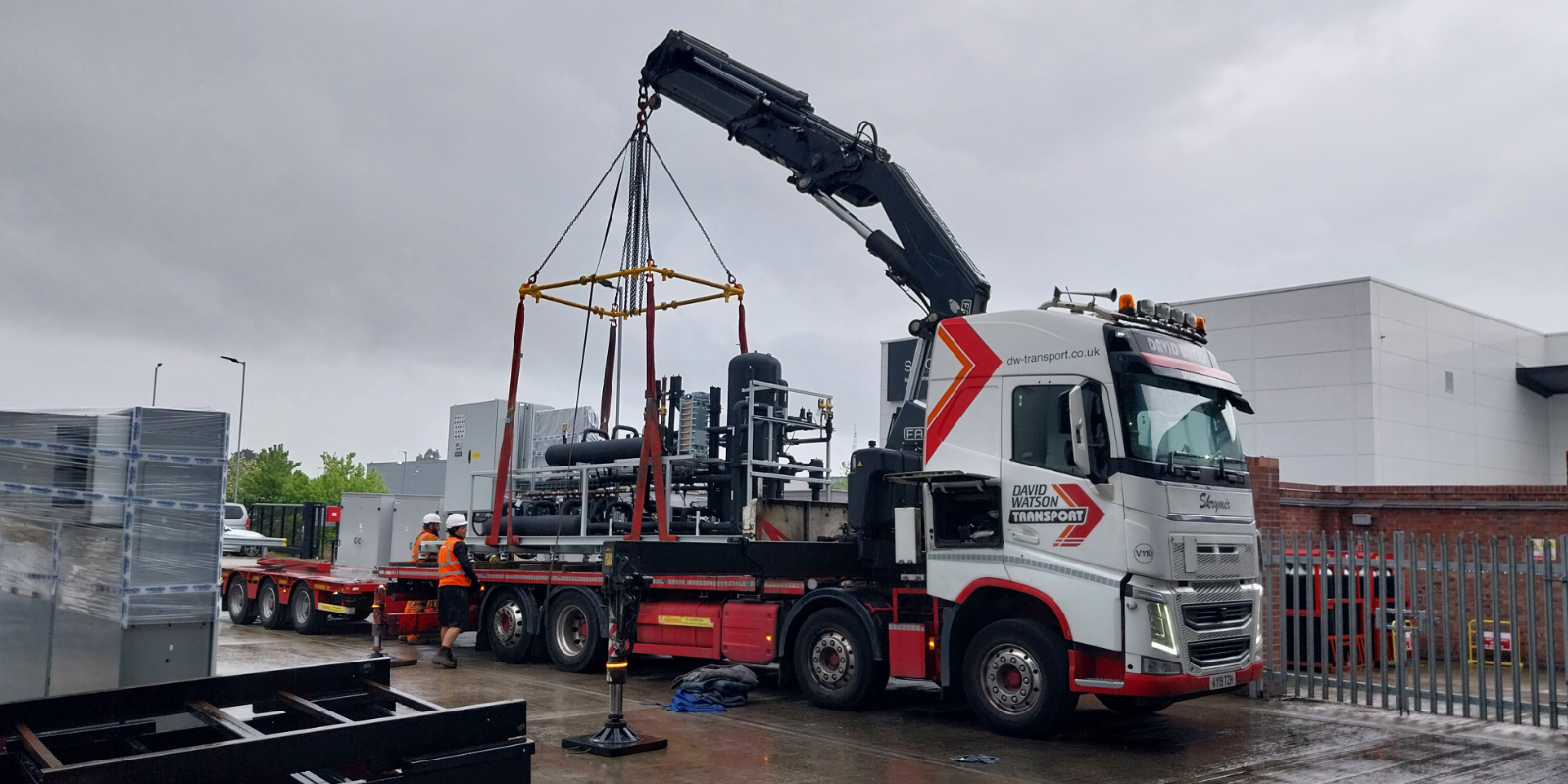
Hubbard recently completed two large industrial CO₂ refrigeration packs, destined for a major food retail distribution centre, for TJ Morris. The project brings together natural refrigerant technology, commercial refrigeration controls, heat recovery and a number of engineering features focused on efficient, stable operation.
The Challenge
When refrigeration is supporting a major food distribution operation, efficiency is only part of the requirement. The system also needs to deliver reliable performance as demand changes, with controls and resilience considered from the outset.
Commercial and industrial refrigeration systems rarely operate under identical conditions throughout the day. Changes in product movement, ambient conditions and refrigeration demand can all affect the load placed on the system.
The scale of the system reflects the demands of a major distribution centre, where refrigeration needs to support different temperature requirements while continuing to perform as operating loads change.
The Solution
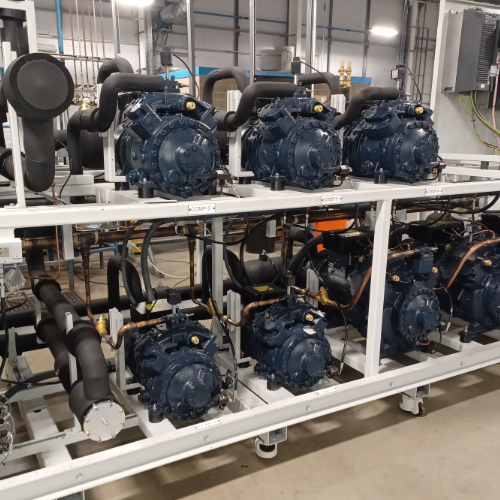
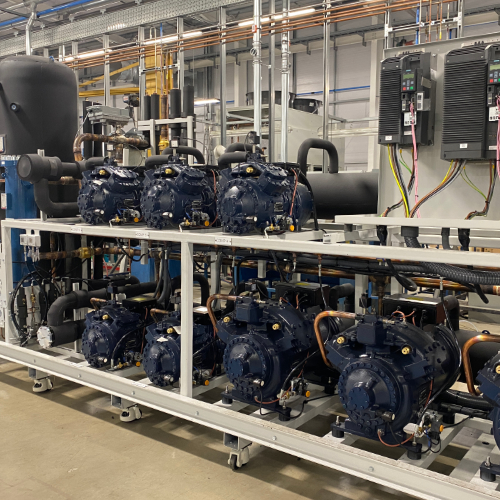
Each of the CO₂ refrigeration packs incorporates three Medium Temperature compressors, three Low Temperature compressors and two Parallel compressors. Together, they provide substantial refrigeration capacity:
- Medium Temperature - 320 kW per pack at -8°C SST.
- Low Temperature - 175 kW per pack at -31°C SST.
- Operating Pressures - 120 bar discharge, 80 bar liquid and 60 bar suction.
- Liquid Receiver - 550 litres.
A particularly important part of the specification is the control strategy. Each pack incorporates RDM primary and backup controls, with each having independent probes and transducers.
This provides an additional level of resilience within a refrigeration application where maintaining system operation is particularly important. It also demonstrates the role commercial refrigeration controls can play beyond maintaining temperature. Controls form part of the wider engineering strategy, helping the different elements of a complex refrigeration system operate together effectively.
The packs also feature suction accumulator headers developed to support safe, stable operation under varying loads. This is particularly relevant in a distribution environment, where refrigeration demand will change according to operating conditions and activity across the site.
Efficiency was considered throughout the pack design. Each system provides 110 kW of heat recovery for warm glycol defrost, making use of heat generated through the refrigeration process rather than simply allowing it to go to waste.
The packs also incorporate a glycol-cooled Low Temperature desuperheater and an LT suction-to-liquid plate heat exchanger to improve subcooling and efficiency. Together, these features demonstrate the importance of looking beyond individual components when developing an efficient industrial refrigeration solution.
Compressors, controls, heat recovery and heat exchangers all have a part to play in overall system performance.
The Outcome
For the TJ Morris project, the combination of compressor capacity, control strategy and suction accumulator headers helps provide the engineering foundation needed for safe and stable operation under varying loads.
The use of CO₂ as the refrigerant also supports the customer's move towards a more sustainable refrigeration approach as its distribution network grows.
The two refrigeration packs demonstrate how efficiency, control and resilience can be considered together rather than as separate requirements. From the independent primary and backup controls to heat recovery for warm glycol defrost and technology to improve subcooling, each element has been selected around the demands of the application.
For Hubbard's industrial team, the project is another example of the engineering expertise and attention to detail required to deliver large-scale refrigeration equipment capable of supporting demanding cold-chain operations.
Planning an Industrial Refrigeration Project?
If you are exploring natural refrigerant solutions, upgrading existing refrigeration equipment or planning new cold-chain capacity, Hubbard's industrial division can help develop a solution around your operational requirements.
Talk to Our Industrial Refrigeration Team
When refrigeration is supporting a major food distribution operation, efficiency is only part of the requirement. The system also needs to deliver reliable performance as demand changes, with controls and resilience considered from the outset.